Hello, and happy Monday.
First a quote: “To win in the marketplace you must first win in the workplace.” — Doug Conant, former CEO of Campbell Soup Company
A thought (many would describe as a truth) for your consideration and reflection: without customers, we don’t have a business. But here’s an equally important truth: without engaged employees, we don’t have customers.
In many companies, customers get all the fanfare. Slogans, strategies, and service standards are all built with them in mind. And, rightly so—our customers pay the bills.
And yet, who delivers those experiences, products, and promises? Your people do! Employees don’t just serve the customer; they are the company in the customer’s eyes and ears.
Perhaps a thought for another day; every single person, and/or department, in an organization has customers, some may be internal, but they are customers just the same.
“If you’re not serving the customer, you better be serving someone who is! ” – Karl Albrecht, Service America
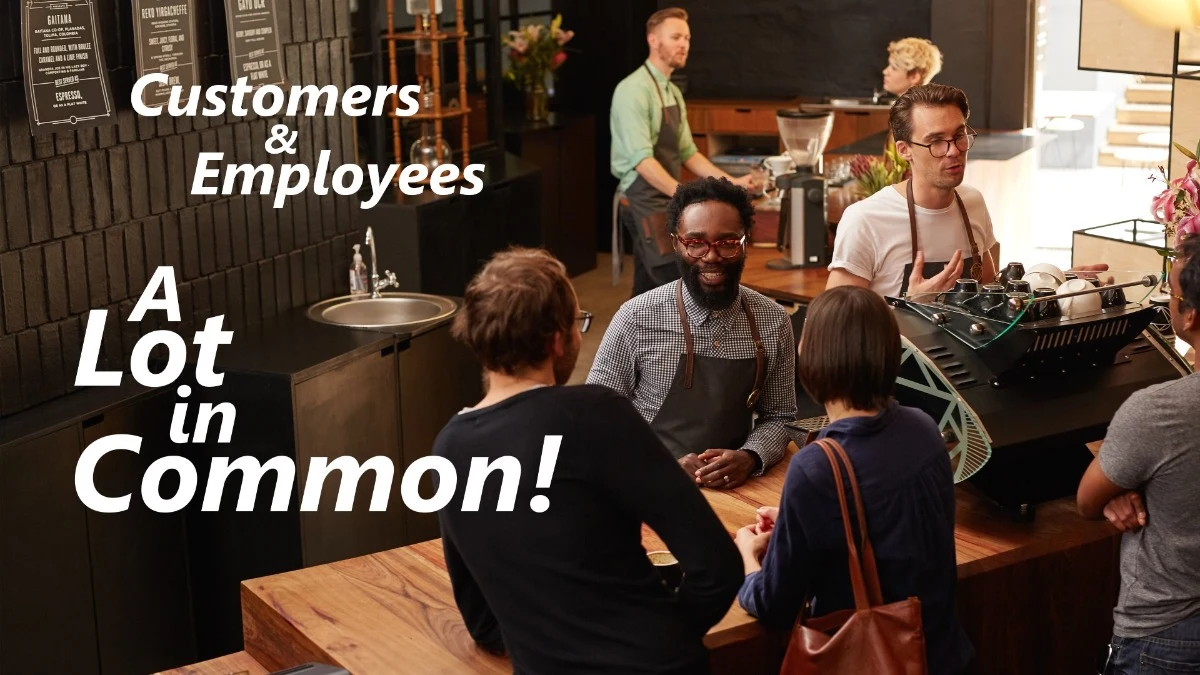
The same energy we pour into creating a positive customer experience needs to be reflected in the way we recruit, onboard, and engage our teams. In fact, when we look closely, the parallels between employees and customers are striking:
1. We can’t survive without them.
Just as no business can survive without loyal customers, no organization can thrive without dedicated employees. Great customer experiences are a byproduct of engaged, trusted, and valued employees. If your people feel unseen or unappreciated, the customer feels it too.
2. They all have options.
Your customers can shop anywhere. So can your employees and job candidates! Job candidates today have more employment options than at almost any time in the past, especially when you add virtual employment opportunities into the mix.
In today’s labor market, your best people are someone else’s top recruits. (Your best employees are likely to have the most options when seeking employment elsewhere.) Gone are the days of “just be grateful for a job.” People today choose employers like they choose brands—carefully and consciously.
3. They vote with their feet.
Disappointed customers often don’t complain; they just stop coming back. Employees are no different. Many won’t tell you what’s wrong—they’ll simply disappear. They ghost interviews, quit before week two, or worse, stay and disengage.
4. Their expectations are higher than ever.
Today’s customer expects personalized, seamless, and responsive service. Today’s employee wants meaningful work, a sense of belonging, and a leader they can respect. Mediocrity is a deal-breaker for both.
5. The competition is fierce.
Companies invest heavily in marketing to attract and retain customers. But attracting and keeping top talent requires the same strategic approach. In many industries, the talent war is more intense than the market share battle.
6. They tell others about their experience.
A satisfied customer tells a few people. A disappointed one tells anyone who will listen. The same is true for employees. Glassdoor, LinkedIn, and everyday conversations shape your employer brand. Your employees are either your loudest advocate—or your harshest critic.
What does this mean for you as a leader?
It means our role isn’t just to serve the customer—it’s also to serve the people who serve the customer.
Here are six practical actions to attract and retain top-tier talent:
- Make on-boarding intentional and memorable.
First impressions matter. Ensure new employees feel welcomed, connected, and valued in the first 48 hours. A warm welcome, a mentor, and clear expectations go a long way. (See recommended reading below, Dan & Chip offer impactful examples on this topic.)
- Create growth opportunities early and often.
Don’t wait a year to talk about development. Offer stretch assignments, learning opportunities, and career path conversations.
Employees stay where they see a future!
- Recognize and appreciate. Often.
It doesn’t have to be extravagant, but it does need to be genuine and consistent. A thank-you note, public praise, or simply acknowledging effort can make someone’s day—and keep them around.
- Ask for input—and act on it.
People are more invested in what they help create. Invite feedback, listen actively, and close the loop by showing what’s changing as a result.
- Model the culture you want to build.
Your people are watching. I like to say, “As leaders, we are always on stage with people watching, even when we’re not on stage.” Trust, respect, optimism, and humility are contagious—but so are micromanagement, cynicism, and indifference.
- Celebrate wins—big and small.
Everyone wants to be part of a winning team. Take time to celebrate progress and victories. Momentum feeds morale. This is especially true when leading people through change. People want to know if and how they’re making progress.
It might be wise to remember, customers remember how you made them feel. So do your employees.
When we treat our team like we treat our best customers—with respect, appreciation, and intentional care—we don’t just create a great workplace. We create a great business!
Bonus Quotes Below.
Suggested Reading:
** The Power of Moments,* by Chip and Dan Heath
Related MMM Articles:
Sincerely,
Bryan Yager
Do you know someone who might benefit from this weekly leadership minute? If so, please feel free to pass along the subscription link below:
-
On LinkedIn: Click here to subscribe to the MMM newsletter on LinkedIn. (Recommended)
-
Via email: Click here to subscribe to MMM and have it sent directly to your email inbox each Monday. (Please note, I plan to discontinue this service in the future.)
Bonus Quotes:
-
“Customers will never love a company until the employees love it first.” — Simon Sinek
-
“Train people well enough so they can leave. Treat them well enough so they don’t want to.” — Sir Richard Branson
-
“Your most unhappy customers are your greatest source of learning.” — Bill Gates
-
“The way your employees feel is the way your customers will feel. And if your employees don’t feel valued, neither will your customers.” — Sybil F. Stershic.
-
“The way you treat your employees is the way they will treat your customers.” Richard Branson
-
“People work for money but go the extra mile for recognition, praise and rewards.” — Dale Carnegie